Wednesday, May 16, 2012

Golden Gate Bridge's 75th Bash

Anyone around San Francisco 25 years ago remembers the 50th anniversary of the Golden Gate Bridge, a gorgeous day where it seemed everyone in the Bay Area wanted to walk across the span, closed to auto traffic for the celebration.

Fast forward to 2012: the big celebration for the bridge's 75th anniversary will be quite different from that unexpected frenzy of tens of thousands cramming onto the bridge. The focus of this year's carefully-planned festivities will not be the bridge itself but the waterfront below, along the wide grassy expanses of the Marina Green and Crissy Field, culminating in a grand fireworks finale at 9:30 p.m.

During the day, Crissy Field will have dance and live music from 11 a.m. to 11 p.m., with vintage cars and motorcycles on display. A historic watercraft parade with classic boats is on tap at the St. Francis Yacht Club from 11 a.m. to 3 p.m. while, at adjacent Marina Green,  dance troupes and bands will perform from 11 a.m. to 10 p.m.

But no doubt the showstopper will be fireworks over the bridge's iconic towers, with soundtrack aired live on KFOG 104.5/97.7 FM. Like all fireworks in San Francisco, much will depend on the weather. If it's a clear evening (fingers crossed), they should be amazing. The best place to see them will be any place along the bay from Fort Point to the eastern part of the Marina Green, organizers said. The city's hills (particularly the ridge above Cow Hollow) and the Marin Headlands should also provide terrific views.


But don't drive there, said officials from the Golden Gate National Parks Conservancy, the Golden Gate Bridge, Highway and Transportation District and the city of San Francisco. Parking will not be available in the Presidio, Crissy Field or Marina Green. "Severe" traffic congestion is expected, they say.  The tear-down of Doyle Drive and maze-like Presidio detours are also complicating matters. So, plan to take public transportation and give yourself plenty of time. Or walk or bike.

If you go, wander and explore. There's so much to like about what's new in the Presidio and bridge area, including a sleek new visitors center, gift shop and plaza open at the bridge (photos here), for the first time offering the millions who come to San Francisco to see the city's most famous landmark a place to learn about the span, buy some very cool and unique souvenirs and grab a bite (a cafe is planned to open in a few months). The beautiful new area -- all done in "International Orange," the bridge's special color -- is fitting to such a spectacular setting.




Thursday, March 29, 2012

Lots on Tap for San Francisco Visitors 2012

There's always lots going on in a city like San Francisco but this year seems especially exciting. First on everyone's list is the 75th anniversary celebration of the Golden Gate Bridge. Year-long festivities and revitalization of the plaza areas on the south end are in full gear. The big party will be on Sunday, May 27 when the entire Crissy Field and nearby area (but not on the bridge itself -- no one wants a repeat of the 50th anniversary squishfest) will be transformed into a festival devoted to celebrating the famous and beloved city icon. (Click here for the SF Chronicle's really cool old bridge opening photos).
This week, San Francisco's tourism industry gathered for a day-long forum on the outlook for the city's travel industry. It turned into a bit of a celebration in itself with good news for the industry: San Francisco tourism is up and the forecast is rosy.
Some 16.35 million visitors spent the night in the city in 2011, up 3.1% from 2010. Those figures are not at the same level as the pre-recession and pre-dot-com bubble "glory days" of 1997-2000 when the city drew 16.7 million overnight visitors each year.
But it's close and no one in the room was complaining, especially since hotel occupancies are over 80% and average daily room rates are creeping higher (projected to be $171 this year, a 10% hike from last year -- good news for the industry, not such good news for travelers and their pocketbooks).
Mayor Ed Lee said that the data "shows we are on a very good track for recovery." Tourism is San Francisco's number one industry, with $8.3 billion in economic impact.
Mayor Lee also noted all the excitement in the city this year. Not only is the big bridge celebration planned, but there's 100 years of MUNI to celebrate (April 5 with the relaunch of the historic No. 1 streetcar), the opening of the Lands' End visitors center above the old Sutro Baths and, of course, the start of the America's Cup.
That international sailing race in 2013 has been pared down a bit in its ambitions, he said, but it is still going to be a thrilling event that will put San Francisco in the worldwide spotlight and draw thousands of visitors to the waterfront.
San Franciscans and visitors will get a taste of that excitement Oct. 4-8 when the city's annual Fleet Week festivities will be combined with a sample of the America's Cup so that we'll have the Blue Angels soaring overhead and those sleek multi-million dollar yachts sailing on the bay below.

Monday, March 5, 2012

Calaveras County Spring

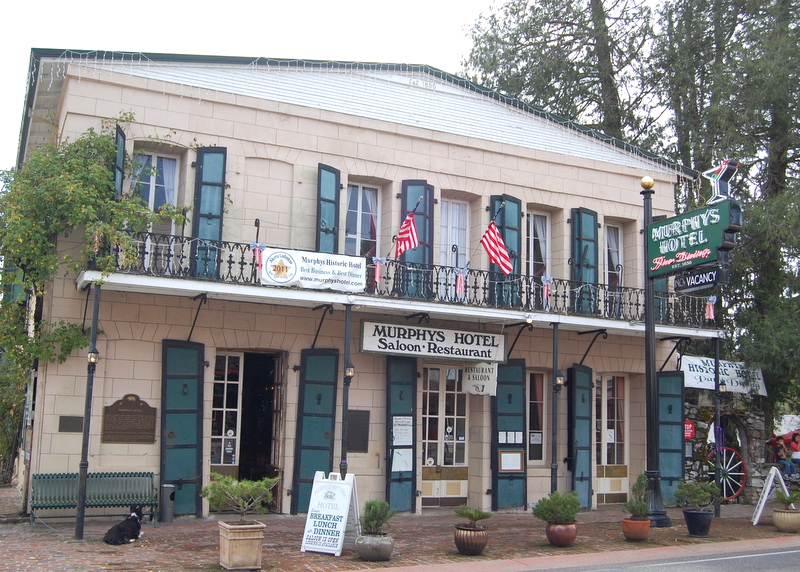
About this time last year I took a short road trip with a friend to Murphys in Calaveras County where early spring is a beautiful time for a visit, California's golden poppies providing splashes of color along the sides of Highway 4. The quaint little Gold Rush town is quiet, its sidewalks almost empty. Only locals seem to be around, going about their daily errands.
Murphys Hotel
I've always loved Murphys, which is one of California's best-preserved 19th century towns. The streets are lined with towering oaks and cedars. Handsome buildings from the late 1800s have been restored, but not to the point that they are unrecognizable from their Gold Rush days. The Murphys of today is a tourism destination, there's no doubt about that. It is full of wine tasting rooms, shops and boutiques. But they are tasteful and the town is not overrun with kitsch.

Several historic buildings have been turned into good restaurants, including Firewood, which has wonderful wood-fired pizza and Mexican food.

California's golden poppies
The saloon at the funky old Murphys Hotel is always fun, its creaky wooden floors where Mark Twain once walked are steeped in history, and no doubt more than one spilled beer over the decades.

For a little bit of Europe, there's Milfiori, an inn just outside of Murphys in the old mining hamlet of Douglas Flat. The atmosphere is more like Provence or Tuscany than hardscrabble mining town. There are lush, wide lawns and comfortable chaise lounges, hanging wisteria and pots of lavender.

Owner Willi Krauss, a Silicon Valley refugee, has created a haven in the restored 1860s farmhouse with three bedrooms and a wide front porch made for idling away a sleepy afternoon. A cozy little cottage rests near the barn in the back. Next door is the historic Pioneer Schoolhouse that dates from the early 1850s.
Milfiori Inn


The Italian Store
A couple of times a year, Willi unshutters the rustic stone building at the front of the property, the "Italian Store." Built in 1861 to sell goods to the legions of Italian and Welsh miners that flooded the area in search for gold, today it's a storehouse for antiques and collectibles.

This spring, the store's old iron doors will be opened April 28 and 20 for the twice-annual sale -- and chance to peak inside one of Calaveras County's many historic treasures.
Pioneer Schoolhouse, early 1850s

Tuesday, January 31, 2012

Gung Hay Fat Choy from San Francisco's Chinatown


San Francisco's Chinatown is really alive this time of year, bustling with energy and awash in bright red colors. Maybe because of the spectacular weather we've been having (sun, sun and more sun) and perhaps it's because we're ushering in the Year of the Dragon, but Chinatown seems more vibrant than ever.
The climax of all the festivities will be, of course, the annual Chinese New Year's parade, this year scheduled for Saturday evening, Feb. 11.
I recently updated by Chinatown travel app for iPhones, iPads and iPods, adding a few new restaurants. Two are especially wonderful if you like spicy food: The Potsticker on charming Waverly Place and Z&Y in the middle of one of the best blocks for eating in Chinatown, Jackson Street between Grant and Kearny.
You may have walked by The Potsticker over the years and dismissed it as a tourist spot. But last year it was taken over by new management (with staff from Z&Y). Head for the house specials such as filet of sole and any of the "Hot and Numbing Spice Pots," which you can ask to be prepared less fiery. The delectable and not-hot smoked tea duck is excellent.
Z&Y's fiery "explosive" chicken
The Potsticker's smoked tea duck
Z&Y restaurant also specializes in hot Szechuan fare. Try the kung pao bean curd with soft homemade tofu sprinkled with peanuts and onions. The signature dish is Chicken with Explosive Chile Pepper, an eye-catching plate that has diners digging through mounds of chile peppers to get to crisp juicy morsels of chicken (which are, amazingly, not very spicy). I loved the Tan Tan noodles, silky homemade noddles tossed with minced pork and vegetables. But there's so much more on the menu to explore.
For my updated Chinatown app, click here and look at iTunes for the download.
Gung Hay Fat Choy!
Follow me on Twitter: lauradelrosso

Monday, January 9, 2012

Treasure Island Flea Continues into 2012

Treasure Island has become the site of what must be one of the most scenic flea markets in the world. The event, called the Treasure Island Flea, is continuing in 2012.
For the first three months of the year the market is heading indoors, to the beautiful and historic One Avenue of the Palms building -- the last useable building from the 1939 San Francisco World's Fair.
The market -- called the TI Flea Pop-Up -- will take place the last Saturday and Sunday, 10 a.m. to 5 p.m. of each month from January through March.
For the rest of the year, the Flea will take place outdoors, on the lovely waterfront Avenue of the Palms pathway that offers spectacular views of the bay and San Francisco and is dominated by the massive curvy woman statue that was built for Burning Man.
Market dates are the last weekend of each month, from 9 am. to 4 p.m. each day.
I drove over to Treasure Island in late November to experience the Flea for the first time and wondered why I had waited to long. This is a fun weekend happening: there are all kinds of vendors, including antiques and collectibles, but also craftspeople and others who are clearly garage sale or junkyard scavengers with some interesting stuff to sell. Making it even more of an event are the dozen or so food trucks that participate. The organizers say in 2012 they are aiming to attract even more food trucks and create more food areas, perhaps even a "seafood grotto" with live shellfish.
Then there's the fun of being on the island itself. This 400-acre man-made spot in the middle of San Francisco Bay was constructed in 1936 and 1937 for the San Francisco World's Fair. It was considered as a site for San Francisco International Airport. For many years, it was U.S. Navy base. Many of those old military buildings remain, some now leased to businesses. A couple of wineries offer tasting rooms on Treasure Island, including TI Wines. Some old buildings are used for storage, including for the old Doggie Diner "hot dog" heads. It's also one of the best places to get a view the construction of the new eastern span of the stunning Bay Bridge. So, go enjoy, maybe buy something, but stroll and eat at the Treasure Island Flea.

Wednesday, October 26, 2011

India's Maharaja at San Francisco's Asian Museum


Jewel-encrusted belt
The throne room
Royal carriage
The Asian Art Museum has emerged from some troubled times with a snazzy new logo and energized strategy for attracting visitors to the world-renowned collection of art treasures at San Francisco Civic Center. The newest exhibit is the spectacular "Maharaja: The Splendor of India's Royal Courts," which runs through April 8.
I got a glimpse of it during a recent press preview and am making plans to go back: the galleries are filled with beautiful objects and descriptions of the fascinating history of Indian kingdoms and their rulers from the 1700s to the mid-20 century when British rule ended and it's worth spending more than just an hour.
The exhibit was organized by the Victoria and Albert Museum in London, where it ran from late 2009 to early 2010 and attracted 160,000 visitors, one of the museum's most popular Asian exhibits ever, according to one of the curators.
The 200 objects include elaborate jewelry, costumes and weaponry of the royal families and the royal courts in diverse Indian kingdoms. The first gallery is devoted to descriptions of the maharaja rulers and their ideal qualities and strict set of behaviors: not only were they diplomats and administrators but they were expected to be patrons of the arts. They were apparently real bon vivants: wine flasks and hookahs are inlaid with jade, rubies, emeralds, turquoise and gold. Their thrones were surrounded by exquisite textiles.
The history of the kingdoms and their evolution over the tumultuous 300-year period covered in the exhibition is well described. The British East India Company, which was drawn to India for its riches in spices and textiles, took over and the maharajas fell under British control by the 1840s. But the maharajas managed to maintain some authority and retain their riches and culture as princes as the British empire for several more generations.
The Asian Art Museum has a full calendar of performances, films, evening events and lectures scheduled to accompany the exhibit. Among them is a Nov. 13 screening of the documentary "Merchant Ivory's India" with a talk by Mills College professor Nalini Gwynne after the 2:30 p.m. screening (free with museum admission). Daily docent-led tours are scheduled from 10:15 a.m. to 3 p.m. each day.

Thursday, September 22, 2011

Washed Ashore in Marin County


If you haven't been to the Marine Mammal Center in the Marin Headlands in a while, it's time to go. The facility was enlarged and enhanced two years ago and it's totally a different place than before when it operated out of trailer-like containers, the sea lions and elephant seal pups enclosed in a few pens. Today, it's a state-of-the-art educational and solar-powered center with terrific displays and an observation deck for watching the marine mammals play in pools.
And, if you go before Oct. 15 you'll find a colorful art exhibit designed to emphasize the dangers pollution and toxic objects are posing to the oceans. Washed Ashore: Plastics, Sea Life and Art was created by Oregon artist Angela Hazeltine Pozzi who used plastics found on the beaches of Oregon. All shapes of bottles and other objects -- some from as far away as China (some have the Beijing Olympics logo) - were picked up and turned into 15 marine life sculptures.
The Marine Mammal Center is the largest such facility in the world. It covers 600 miles of coastline of northern California, and is staffed by a team of scientists who care for marine life in trouble, such as elephant seal pups separated from moms or sea lions who have been shot with rifles. Hundreds of volunteers lend a hand, including helping rescue marine mammals on remote beaches. The center is open daily 10 a.m. to 5 p.m. You can explore on your own or take a docent-led tour for $7 per person.

Tuesday, May 10, 2011

Peek at San Francisco's New Exploratorium

The San Francisco waterfront is destined to play an even bigger role in the life of the city in the coming years. The tear-down of the Embarcadero freeway and the renovation of the Ferry Building were just the start of the renaissance. New restaurants, cafes, revamped piers and promenades seem to open each year and, with America's Cup sailing races expected to bring hundreds of thousands of people to the area in 2012 and 2013, more developments and improvements are in the works.
One of the most anticipated is the new Exploratorium, San Francisco's museum of "science, art and human perception," which broke ground last fall on Piers 15 and 17, at Embarcadero and Green Streets, about halfway between the Ferry Building and Pier 39. There's a large crane towering over the piers these days and you can even watch as the new building is constructed.
The first phase of the new Exploratorium is a $220 million project on Pier 15 (Pier 17 is on tap for future expansion) set to open in 2013 in a greatly expanded and more modern space than the museum's current home at the Palace of Fine Arts.
Museum staff said they expect visitor numbers to jump with the new, more accessible location, which is only a 10-minute walk from the Embarcadero BART station and along  major transportation lines (as opposed to the current location which is a cross-town journey for many visitors, particularly from the South and East bays.)
The historic pier where the new Exploratorium is being built spans the length of almost three football fields. Engineers drove 160 foot piles underneath the bay to replace, repair and seismically upgrade hundreds of dilapidated pilings and the substructure, which date to the early 20th century. The interior of Pier 15 will be preserved, including its truss structure, which stretches 820 feet — the equivalent of a New York City block.
The Observatory Building, the only new construction, will stand at the eastern end of Pier 15. The sleek, mostly glass structure will house a new gallery, outdoor terrace and a restaurant with panoramic bay views.
You can get a sense of what's coming at nearby Hyatt Regency San Francisco, which is showcasing the Exploratorium during the month of May as part of its "Culture Club" program. Each month, the hotel features a local cultural institution in its huge atrium lobby, North America's largest. (In June, the San Francisco Symphony will be featured; in July, Monterey Bay Aquarium).
Take a wander inside the atrium and check out several interactive exhibits from the Exploratorium that may bring back memories of field trips or afternoons at the Palace of Fine Arts. There's the pendulum snake, circle of waves, spinning eraser and the giant chair, among many others, that are a reminder of why the Exploratorium has been called "a scientific funhouse, art studio and an experimental laboratory all rolled into one."